What Is Token Maxxing? Spending Compute to Buy Correctness
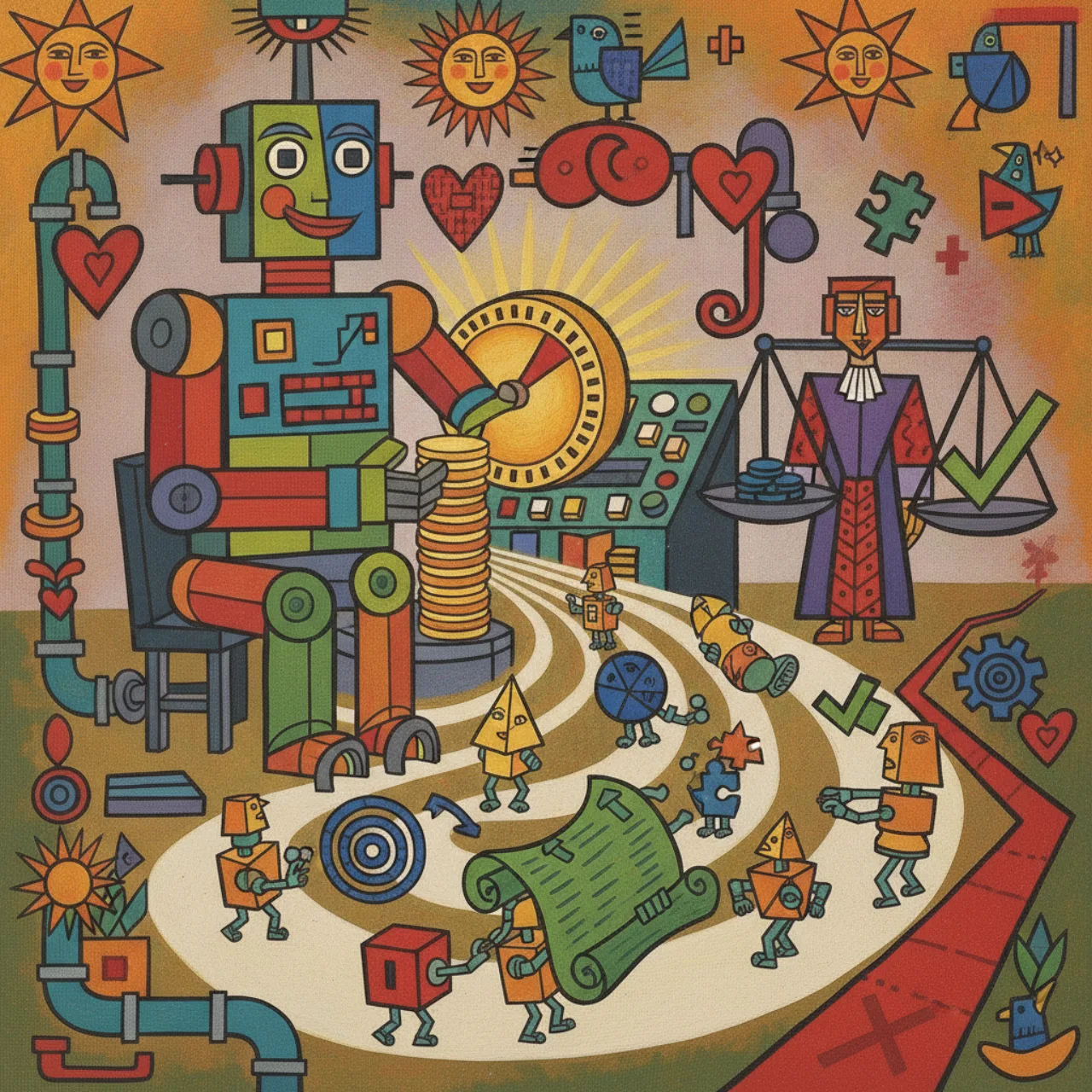
Every corner of the internet has its -maxxing suffix by now. It started with looksmaxxing and never looked back. So it was only a matter of time before the AI crowd coined token maxxing, and — meme aside — it points at a genuine shift in how we build with models.
The one-line version: token maxxing is deliberately spending more tokens on a problem because, most of the time, tokens are now the cheapest ingredient you have. More reasoning, more context, more attempts, more agents. You stop rationing tokens like they're 2023 GPT-4 prices and start treating them the way a compiler treats CPU cycles — something you spend freely to get a better answer out the other end.
Let me unpack that, because "just use more tokens" is easy to say and easy to do badly.
The mental shift: tokens are compute, and compute is cheap
For a long time the instinct was to keep prompts lean. Short context, terse system prompt, one shot, get out. That made sense when a good model was expensive and slow.
Two things changed. Models got an order of magnitude cheaper per token, and — more importantly — we figured out that letting a model spend tokens thinking makes it measurably smarter. That second part is the whole game. It has a proper name in the literature: test-time compute. Instead of pushing all the intelligence into training and then asking for an instant answer, you let the model burn tokens at inference time — reasoning step by step, second-guessing itself, exploring branches — and the quality of the output climbs with the number of tokens it's allowed to spend.
Once you internalize that, "token maxxing" stops being a meme and becomes a lever. Correctness isn't a fixed property of the model anymore. It's a dial, and the dial is denominated in tokens.
The four ways to spend
When people say they're token maxxing, they usually mean one (or several) of these:
- Reasoning depth. Turn the thinking budget up. Reasoning models expose this directly now — low / medium / high / max effort. Higher effort = more internal tokens spent before the model commits to an answer. For a gnarly bug or a subtle design tradeoff, cranking effort is often the single highest-leverage move.
- Context stuffing. Fill the context window with everything that might be relevant — the whole file, the neighboring files, the docs, the error logs. A model can't reason about what it can't see, and with today's large windows the marginal cost of one more file is trivial next to the cost of a wrong answer built on missing information.
- Sampling / attempts. Ask the same question several times and pick the best, or have the model generate N candidate solutions and vote. This is the "generate, test, rank" pattern I've written about before — you're trading tokens for variance reduction.
- Fan-out. The big one for agentic work. Instead of one agent doing everything in sequence, you spawn a dozen — each on its own slice, each in its own context — and synthesize. A review that finds a bug, then spawns three independent skeptics to try to refute it, then keeps only what survives. That's token maxxing as an architecture, not a setting.
The first two make a single call smarter. The last two throw many calls at the problem and let structure do the rest.
Why it actually works
Here's the intuition I keep coming back to. A single forward pass through a model is one sample from a distribution of possible answers. Some of those answers are right, some are subtly wrong, and you don't know which one you got.
Every token-maxxing technique is a way of beating the distribution instead of gambling on one draw from it:
- Reasoning depth reshapes the distribution so the good answers get more probable.
- Context reduces the number of ways to be wrong by removing "the model didn't know."
- Sampling and fan-out draw many times and use agreement, verification, or a judge to find the good draw.
None of this makes the model fundamentally more capable. It makes the system around the model more reliable. And reliability is usually what you're actually buying.
When it's worth it — and when you're lighting money on fire
Token maxxing is not free, and the failure mode is real: I've watched a "thorough" setup spend a fortune re-deriving something a five-line grep would have answered. So the honest version has boundaries.
Spend the tokens when:
- The cost of a wrong answer dwarfs the cost of the tokens. Migrations, security-sensitive code, anything you're going to ship and not look at again.
- The problem is genuinely hard or ambiguous — a subtle bug, a design with real tradeoffs, a task where the first plausible answer is often wrong.
- You can verify the output. Fan-out plus an adversarial check only helps if something downstream can tell good from bad — tests, a compiler, a judge. Tokens spent generating candidates you can't evaluate are just tokens.
Don't bother when:
- The task is mechanical and unambiguous. Renaming a variable does not need max reasoning effort and twelve agents.
- You already know the answer's location. If it's one file, one lookup — do the lookup. This is where "throw more tokens at it" curdles into laziness dressed up as thoroughness.
- Nothing can check the result. More attempts at an unverifiable task just gives you more unverifiable guesses.
The dial has diminishing returns, too. Going from one shot to a reasoning pass is a huge jump. Going from ten agents to twenty is often noise. The skill isn't turning the dial to max — it's knowing how far to turn it for this problem.
The part nobody likes to say out loud
Token maxxing works partly because we've stopped pretending the model is the whole product. The model is one component. The harness around it — the reasoning budget, the context you assemble, the fan-out, the verification — is where a lot of the real quality now lives. Two teams using the identical model can ship wildly different reliability depending on how much, and how wisely, they spend.
So the next time someone says they're "token maxxing," don't roll your eyes at the slang. Ask the real question underneath it: are you spending those tokens where a wrong answer is expensive and a check exists to catch it — or are you just turning the dial to max and hoping?
The first is engineering. The second is the meme.